


Returns Cost More Than You Think
Every day, millions of dollars in returned merchandise sit in warehouses, losing value by the hour.
Ecommerce returns management has become one of retail's most expensive problems. For decades, retailers have treated returns as an unavoidable drain on business. According to a report published by NRF, online purchases return at rates of 16% to 20% across retail, climbing above 30% in apparel—numbers that can overwhelm operations during peak seasons.
But leading retailers are leading the charge in shifting the mindset. Through AI-powered returns management systems, they're recovering significantly more value from returned items—transforming reverse logistics from an inevitable cost drain into a strategic opportunity to capture more profit.
From Cost Center to Profit Center: The Returns Mindset Shift
A returned item shouldn’t immediately be considered waste or loss. Many items come back nearly untouched. A winter coat that was only tried-on once, a blender with a damaged box, or shoes that didn't fit. If identified and handled quickly, these items can be restocked, discounted slightly, or channeled into secondary markets.
The key question isn't "how do we minimize return costs?"
Rather, it’s "what's the smartest path to maximize value from this specific item?”
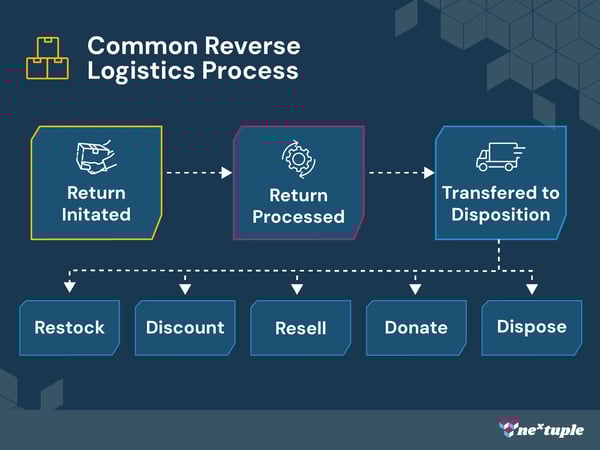
For some retailers, this shift begins with creating a decision tree: restock, resell, discount, liquidate, or donate. That mindset change alone often unlocks measurable gains in recovered revenue.
Why Speed Matters in Returns Processing
Returns operate on a clock. Every day of delay erodes potential recovery value.
The principle is straightforward. Items processed quickly retain significantly more value as seasonal windows remain open, styles stay current, and product condition remains optimal.
Seasonal Value Curve for Returns
Consider the seasonal reality. Think about a winter coat returned in late December. If it is inspected, graded, and routed within a few days, it goes back on a hanger while shoppers still want it, and it can sell close to full price. Let it sit until March, and the moment passes. It slips to clearance, tying up capital and floor space.
Speed is the difference maker. Quick intake keeps seasonal items in season. A short delay invites markdowns. A long delay turns good merchandise into end of line inventory. Move returns while demand is still warm, and value follows.
The Automation Imperative
This ticking clock has pushed retailers to rethink how returns are handled. Manual processes such as staff inspections, routing through central warehouses and back-and-forth decision-making are simply too slow.
Automation powered by AI is shortening the cycle.
Computer Vision Systems scan returned products for damage, wear, or defects in seconds and catch issues that human inspectors might miss or assess inconsistently.
Machine Learning algorithms analyze historical data on returns to predict the best resale channels and right price points instantly. What once took minutes per item now happens in real-time at the point of receipt.
This is where modern order management systems become critical. They connect inventory signals, pricing, and routing so decisions happen quickly and consistently across the network.
AI-Powered Returns Management: Predictive Routing and Intelligence Across the Supply Chain
AI systems don't just categorize—they learn. With each processed return, algorithms refine their accuracy, recognizing patterns in seasonal demand, regional preferences, and product degradation rates.
Predictive Routing Captures Extended Demand Windows
AI-powered predictive routing can direct items to locations with highest demand immediately. A swimsuit returned in Chicago in September has missed its season locally, but Miami stores are still moving summer inventory at full price. Smart routing captures the extended demand window by redirecting the item south.

Feedback Loop into Procurement
These same algorithms feed insights to procurement, informing smarter buying decisions upstream. The data helps retailers adjust order quantities and reduce overstocking before problems materialize.
The impact is tangible: fewer days wasted, lower handling costs, better demand forecasts for buying decisions, and most importantly, higher retained value.
Automated Grading Systems and Dynamic Pricing for Returns
Not all returns are equal, and without structure, value leaks away silently. Standardized grading systems create a framework for decision-making.
Standardized Grading for Returned Items
“A-grade” items (essentially new, unopened or tried-on once), go back on shelves at full price.
“B-grade” items (minor cosmetic flaws, slightly used but fully functional) can move quickly with 10–15% markdowns.
“C-grade” items (visible wear, cosmetic damage or aged inventory) are unsellable in primary channels but may still find buyers in liquidation or bulk resale.
Without a grading system, warehouses rely on inconsistent human judgment—and instinct doesn't scale. One inspector's B-grade could be another inspector’s C-grade, creating missed recovery opportunities. With standardized grading in place, every product follows a clear, consistent path.
Dynamic Pricing Prevents Value Degradation
Resale value shifts constantly with demand, season, and even geography. A toy returned the day after Christmas can resell at 80-90% value through New Year's. Process it in February, and it sits in inventory for 10 months waiting for next season—tying up capital and warehouse space. Software that adjusts prices in real time prevents this value erosion.
How AI-Powered Dynamic Pricing for Returns Actually Works
AI-powered pricing engines analyze multiple variables simultaneously to determine the optimal price point for each returned item, including:
- Current inventory levels across all locations
- Competitor pricing for comparables
- Local demand signals and buying patterns
- Weather patterns affecting seasonal products
- Social media trends indicating emerging demand
The system determines the optimal price point for each returned item in real time, maximizing revenue while ensuring quick turnover.
For leadership teams, this creates a pivotal decision point: absorb losses from outdated systems or invest in AI-powered technologies that pay for themselves within a few seasons.
Alternative Resale Channels to Maximize Returns Recovery
Primary shelves aren’t the only—or always the best—destination for returns. Smart retailers diversify across multiple channels to optimize recovery.
Outlet stores remain a reliable option for slightly flawed or off-season goods. Outlet channels work particularly well for B-grade items and seasonal merchandise that missed its primary selling window but still has months of usable life.
Employee purchase programs can clear space quickly by offering staff discounted merchandise while building employee satisfaction and engagement. Beyond financial recovery, these programs boost morale and give employees firsthand product experience that improves customer service quality.
International resale markets can open up new demand. An item that lags in one geography may sell at a premium in another. Winter apparel returned in April has missed its US season but commands full or near-full value in Australia's fall market. Similarly, regional preferences vary dramatically. An item that underperforms in one geography may sell at premium in another due to style preferences, sizing differences, or cultural factors.
Liquidation and bulk resale for C-grade items or aged inventory offer quick turnaround. While recovery is lower than other channels, speed prevents further deterioration and frees valuable warehouse space for higher-value inventory. The key is establishing relationships with multiple liquidators to create competitive tension and ensure best-possible recovery rates.
Donation programs can provide tax benefits, free valuable warehouse space and strengthen brand reputation. Sustainability-focused consumers increasingly factor charitable programs into purchase decisions—making donation a brand investment as much as a disposal strategy. Strategic donation programs target items that would otherwise be destroyed or recycled at zero recovery, converting waste into goodwill and tax advantages.
By diversifying these channels, retailers reduce dependency on any single path and maximize the chances of recovery.
Are You Measuring What Actually Matters?
None of these strategies succeed without measurement. Recovery rate shows how much value is recaptured. Time-to-resale reveals processing speed—critical for maintaining value. Processing cost per unit highlights where automation reduces overhead.
The most important metric, though, is net recovery value after all expenses. For executives, that number becomes the bottom-line justification for further investment.
Your Returns Monetization Checklist
☐ Measure your current recovery rate and time-to-resale
☐ Implement standardized A/B/C grading across all returns
☐ Deploy AI for inspection, routing, and dynamic pricing
☐ Test at least one new resale channel beyond primary retail
☐ Track net recovery value after expenses as your key metric
☐ Build executive dashboards that track recovery value, speed, and costs
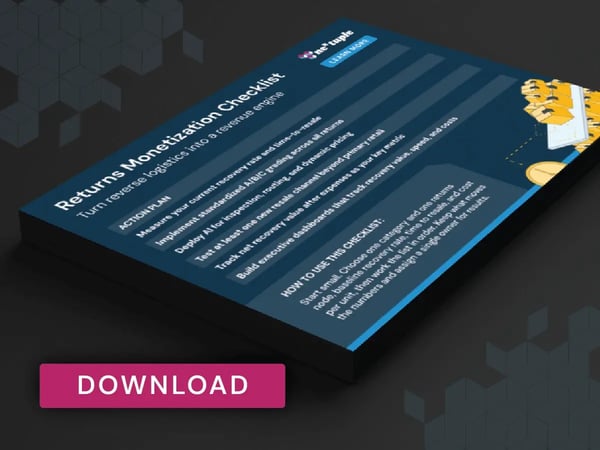
Download the Returns Monetization Checklist here.
From Inevitable Cost to Strategic Advantage
The industry’s relationship with returns is fundamentally changing. What was once a drain is becoming a profit lever and competitive differentiator.
Picture the near future: returned items move seamlessly from customer to warehouse to optimal resale channel within days. Executives review dashboards that show recovery rates improving quarter after quarter. Sustainability reports highlight reductions in waste and stronger community programs.
The challenge isn’t to eliminate returns—they’re an inevitable part of modern omnichannel retail. The challenge is to monetize them efficiently and consistently. Companies that embrace this shift will transform reverse logistics from a margin drain into a source of competitive advantage.
Ready to turn returns into revenue? Talk to our team about your specific returns challenges, volumes, and transformation goals.
Authors

Ashwini Pariyarath Raju
Ashwini is an Architect at Nextuple, where she helps shape technical vision and architecture strategy. With a strong background in software development and a passion for scalable, customer-focused solutions, she thrives on solving complex challenges and driving innovation across teams.
Connect on LinkedIn

Monica Thakwani
Monica is an Associate Product Manager at Nextuple, where she transforms user needs into innovative solutions that solve real business problems and deliver measurable value. Her background in software development and customer service enables her to build impactful products through technical expertise and customer-centric thinking.
Connect on LinkedIn