
Skip to content

CASE STUDY

How a Beauty Company Modernized Commerce Across Three Brands

Most transformations at this scale take two to three years. We helped them do it in less than nine months.

A multi-brand beauty company needed to keep inventory accurate across sales channels as TikTok demand surged. A nightly inventory sync made it possible for orders on one channel to outpace the stock shown on another. Shoppers also saw a fixed delivery window that only appeared at checkout.

The company moved its storefronts to Shopify, replaced its legacy order management system with Salesforce Order Management, and launched a new North American fulfillment network with ShipBob. Pipe17 supported integrations including TikTok Shop. Nextuple led the OMS evaluation, coordinated the rollout and cutover, and led integration mapping and functional testing.

11.8% increase in average order value
8% increase in purchase conversion rate
122% improvement in mobile page speed (Lighthouse score)
3 to 5 distribution points, with same-day shipping before 2pm

The customer

One of Beauty’s Fastest-Growing Digital Portfolios


This client is a fast-growing beauty company with a multi-brand portfolio. This transformation focused on three of its direct-to-consumer brands, modernizing the technology foundation behind its fastest-growing digital channels.

INDUSTRY

Beauty & Cosmetics

BRANDS IN SCOPE

Three direct-to-consumer brands

OMS & COMMERCE PLATFORMs

Salesforce OMS | Shopify

PROGRAM DURATION

9 Months

THE CHALLENGE

Growing Faster Than the Tech Stack Could Handle

As the company scaled across channels, and viral moments became a regular part of the business, three areas stood out as opportunities to modernize.

Warehouse with packages representing real-time inventory visibility across sales channels

Inventory Visibility Across Channels

Inventory synced with the warehouse once nightly, a cadence that worked well under steady demand. But when products went viral, particularly on TikTok, sales could outpace that nightly sync within hours. A surge in TikTok orders might not reserve inventory or update Shopify quickly enough and the reverse could happen too, creating real oversell risk in both directions.

Delivery truck representing accurate delivery promises and order fulfillment

Delivery Date Accuracy

Delivery estimates were a static three-to-five-day range shown only at checkout, after a shopper had already added an item to their cart. There was a clear opportunity to give shoppers a real, dynamic delivery estimate earlier in their journey, right on the product detail page. See how another retailer improved delivery-date accuracy.

Gear and connected nodes representing OMS platform integration and channel agility

Platform and Channel Agility

As new channels emerged and the brand portfolio grew, the company wanted a foundation that could support new channels, new brands, and new markets without heavy custom engineering each time.

KEY TAKEAWAY

These are common growth challenges for scaling multi-brand retailers, and they created a clear opening for a modern, connected foundation built for speed.

THE TRANSFORMATION

Modernizing the DTC Stack Across Three Brands

Shopify served as the storefront platform, and Salesforce Order Management handled order orchestration and inventory reservations. ShipBob supported North American fulfillment, and Pipe17 connected channels including TikTok Shop. The team also moved the loyalty program to Talon.One and centralized sourcing and substitution rules in Salesforce Order Management so the rules could be managed across fulfillment partners.

Commerce Platform

Migrated the storefront to Shopify.

Order Management

Replaced the legacy OMS with Salesforce OMS.

Fulfillment

New North American network on ShipBob.

Loyalty

Migrated the loyalty program to TalonOne.

Integration Layer

Embedded Pipe17 to enable TikTok Shop and beyond.
THE SCALE OF EXECUTION

6.6M+ loyalty profiles migrated
1.9M+ orders migrated
~6,000 QA test cases executed
~4,000 UAT scenarios
300+ team members,
15+ vendors
100+ new data warehouse
tables

What changed in order management?


For Shoppers & Conversion

Real-time delivery estimates now appear on the product detail page, not just at checkout, giving shoppers accurate expectations earlier in their journey to support conversion
Near real-time inventory visibility with reservations across every channel, so promised availability holds true and oversell and undersell incidents drop
Automatic substitution for out-of-stock items, especially Gift-with-Purchase items, so the promised experience stays intact instead of leaving a shopper empty-handed


For Internal Teams

Simplified workflows for re-ships, re-orders, and exception handling: less manual work, faster resolution
Improved notifications for proactive monitoring: teams catch issues before customers do
One centralized place to manage sourcing and substitution logic inside the order management system, rather than configuring it separately in every third-party logistics provider
WHY THIS MATTERS

Sourcing and substitution logic used to live inside each third-party logistics provider individually, meaning every new fulfillment partner required its own setup. That doesn’t scale. Moving this logic into the order management system gives the client one scalable system of record for substitution rules across all fulfillment partners, present and future.

What Nextuple led in the Salesforce OMS rollout.

Program Management

Coordinated the overall program timeline, cross-team dependencies, and cutover planning.

Vendor Evaluation & Selection

Led requirements definition, the request for proposal process, the evaluation framework, and contract negotiation for the new order management system.

Architecture & Solution Design

Enterprise and functional architects documented business requirements and partnered with Salesforce Professional Services’ solution architects on the technical design.

Integration Mapping

Led and managed interface mapping across the 100+ new integrations.

Embedded Development

Contributed developers embedded within the broader build team.

Testing & Quality Assurance

Owned functional testing outright and augmented the client’s team for system integration testing, end-to-end testing, and user acceptance testing preparation.

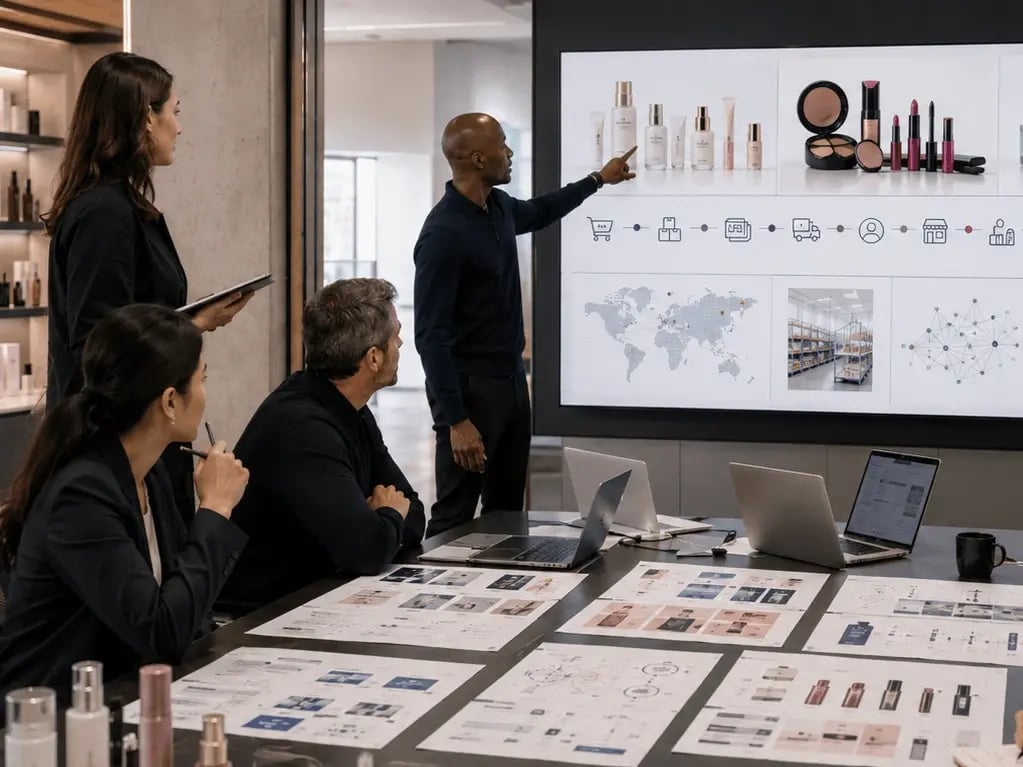
Team reviewing a beauty commerce plan on a screen showing cosmetics and an order fulfillment workflow.
THE RESULTS

What Changed After Launch

Beyond the headline metrics, the expanded fulfillment network also reduced total cost of ownership relative to the previous stack. Most importantly, the program gave the company a modern, connected foundation for what comes next — fast channel expansion (TikTok Shop and beyond), rapid onboarding of new brands onto the same stack, easier third-party logistics and fulfillment expansion, and faster geographic expansion for existing brands.


Post launch, they’ve seen an 11.8% lift in average order value, an 8% lift in conversion, a 122% increase in the mobile Lighthouse performance score and same-day shipping now running from five distribution points. Programs like this usually take two to three years. This project only took 9 months.